Less and Fewer for Kids
Use fewer with things counted one by one and less with amounts not counted as separate units. Less and Fewer: A Practical Guide for Kids offers a quick test: can your child say one, two, three before the word? If yes, choose fewer: fewer books, apples, or mistakes. If no, choose less: less water, noise, or time. Context matters. Chicken can mean food or an animal; paper can mean material or a document. The examples below explain each choice.
What Children Need to Understand
A countable word names separate people, animals, places, or objects. One pencil becomes two pencils, so we say fewer pencils. Other examples include fewer games, questions, cars, and biscuits.
An uncountable word describes a whole amount. We do not say one water or three noises, so we use less water and less noise. Less and Fewer: A Practical Guide for Kids begins here because children can apply the test without long definitions.
This is an English grammar choice, not a maths test. A child may see much rice but still use less because English treats rice as uncountable. The rule applies to air, homework, music, traffic, and space.
How the Grammar Works
The first step in Less and Fewer: A Practical Guide for Kids is identifying the word after less or fewer. If it has a plural form and names separate items, choose fewer. If it names an amount, substance, or idea, choose less.
The table offers a quick comparison. Read each example aloud to hear which choice fits.
The surrounding grammar changes too. We say fewer bottles are needed because bottles is plural. We say less water is needed because water is one amount. The noun and verb give children two clues.
Rules and Examples in Everyday English
Use fewer before plural count nouns: fewer toys, people, lessons, or messages. A number can follow fewer than: fewer than six players. The players remain separate people who can be counted.
Use less before uncountable nouns: less milk, sand, work, or information. Less and Fewer: A Practical Guide for Kids treats time and distance as total measurements. A trip can take less than an hour, and a shop can be less than a kilometre away.
Some nouns change category with their meaning. Less chicken means a smaller amount of food; fewer chickens means a smaller number of birds. Use less paper for material but fewer papers for documents. A room may have less light but fewer lights.
Common Mistakes and How to Fix Them
Children may use less with every smaller quantity after hearing less people or less books in speech. In school writing, use fewer people and fewer books because both nouns name separate, countable items.
Another mistake is placing fewer before every measurable noun. We can measure flour, time, and traffic, but English treats them as uncountable. Write less flour, less time, and less traffic. A countable unit changes the choice: fewer bags of flour, fewer hours, and fewer cars.
Do not overcorrect phrases containing numbers. Less than ten minutes describes one amount of time; fewer than ten pencils counts separate objects. One less is standard in one less problem. One fewer problem is possible but more formal.
Practice Activities
The exercises in Less and Fewer: A Practical Guide for Kids move from noun tests to choices based on meaning. Ask your child to explain each answer with “I can count them” or “It is one amount.” Reasoning matters more than speed.
Exercise 1: Choose Less or Fewer
1. We packed ___ sandwiches.
2. There is ___ juice in the glass.
3. Today we made ___ spelling errors.
4. Please make ___ noise.
5. The journey took ___ time.
6. We saw ___ buses this morning.
Answers: 1. fewer; 2. less; 3. fewer; 4. less; 5. less; 6. fewer.
After checking, name the noun after each blank. Sandwiches, errors, and buses are separate items. Juice, noise, and time are amounts.
Exercise 2: Correct the Sentence
1. We need fewer flour.
2. There are less chairs in this room.
3. The bottle contains fewer water.
4. We spent fewer time indoors.
5. There is less cookies on the plate.
Answers: 1. We need less flour. 2. There are fewer chairs in this room. 3. The bottle contains less water. 4. We spent less time indoors. 5. There are fewer cookies on the plate.
Sentence five needs two repairs: fewer matches the plural count noun, and are agrees with cookies. Children should check the whole sentence, not replace one word alone.
Exercise 3: Let the Meaning Decide
Complete each pair with less or fewer.
1. We used ___ paper for the poster. We submitted ___ papers this term.
2. This soup needs ___ chicken. The farm has ___ chickens.
3. The room gets ___ light in winter. The room has ___ lights than the hall.
Answers: 1. less, fewer; 2. less, fewer; 3. less, fewer.
For more practice, compare objects and materials at home: fewer cups with less water, fewer blocks with less space, or fewer songs with less music. Real examples connect grammar to meaning.
Building a Good Grammar Habit
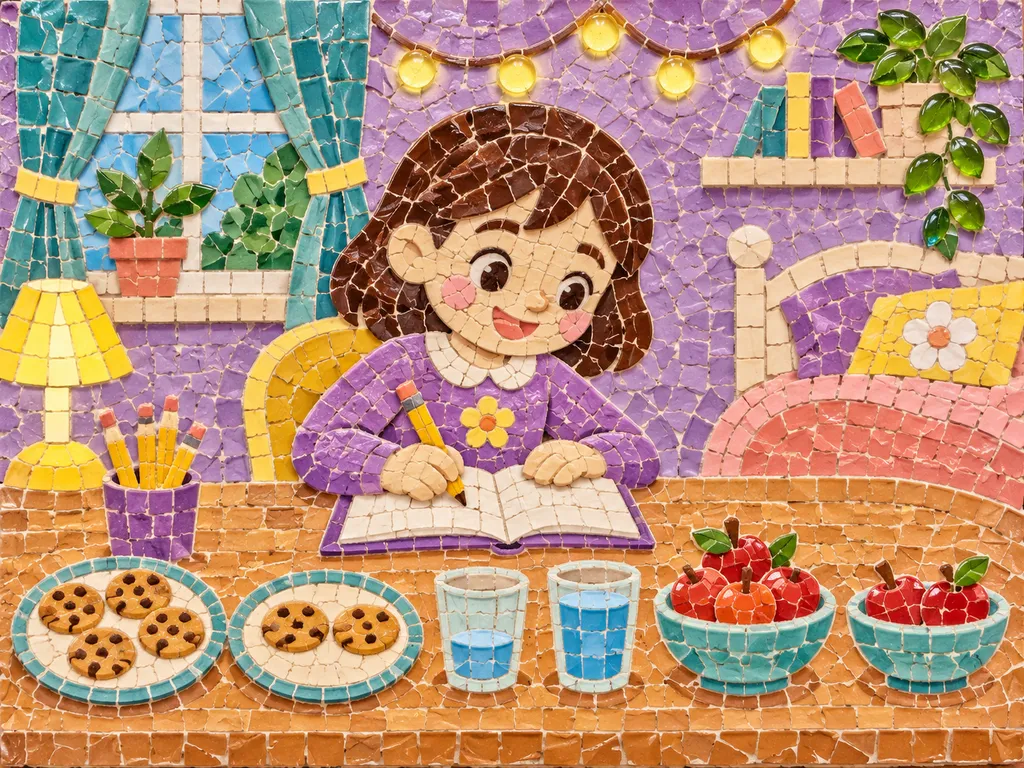
Young learners can sort picture cards into countable items and amounts. Older learners can write pairs such as We bought fewer oranges and We bought less fruit. Each pair shows how the chosen noun controls the grammar.
While reading, pause at less or fewer and identify the controlling noun. Across LearnLink lessons, our tutors can practise short comparisons in conversation, making the rule part of spoken and written English.
Keep corrections brief: name the noun, decide whether it is countable in that sentence, and try again. An explanation teaches more than repeated answers.
- Choose five household nouns and sort them into countable and uncountable groups.
- Pair fewer with countable nouns and less with uncountable nouns.
- Read one book page and find two examples of quantities together.
- Correct one sentence by naming the noun type before choosing less or fewer.
- Create two new examples using groceries, toys, water, or homework.
When a word has several meanings or pronunciations, Cambridge Dictionary is a useful check before turning it into child-friendly examples.
Frequently Asked Questions
Is “Less People” Always Wrong?
Less people appears in informal speech, but fewer people is safer in schoolwork and careful writing. People is a plural count noun. Return to the noun test: one person, two people, three people, so choose fewer.
Why Do We Say “Less than Ten Minutes”?
Ten minutes can represent one amount of time, so less than ten minutes is standard English. Compare fewer than ten tasks, where tasks remain separate countable items. The number alone does not determine the word; the noun's meaning does.
Can the Same Food Word Use Both Less and Fewer?
Yes, when the meaning changes. Use less cake for an amount of food and fewer cakes for separate whole cakes. We can say less fruit but fewer apples. Ask whether the sentence describes an amount or separate items.
Should a Child Learn the Terms Countable and Uncountable?
Teach the idea before the terms. Your child can ask, “Can I count these separately?” Once the test feels familiar, add the labels countable and uncountable. Less and Fewer: A Practical Guide for Kids combines the noun test with grammar terms for practice and schoolwork.
Do English Speakers Always Follow the Rule?
No. Informal speech, shop signs, and fixed phrases may depart from the school rule. Your child need not treat every variation as a serious error. In formal writing, use fewer with plural count nouns and less with uncountable amounts. Learn exceptions through reading and conversation. For the next seven days, practise one sentence daily: identify the word after less or fewer, decide whether it means separate items or one amount, and say the corrected sentence aloud.
Start your child's English journey today — book a trial lesson with LearnLink.
Stay updated on our latest tips and resources by following us on Instagram LearnLink.